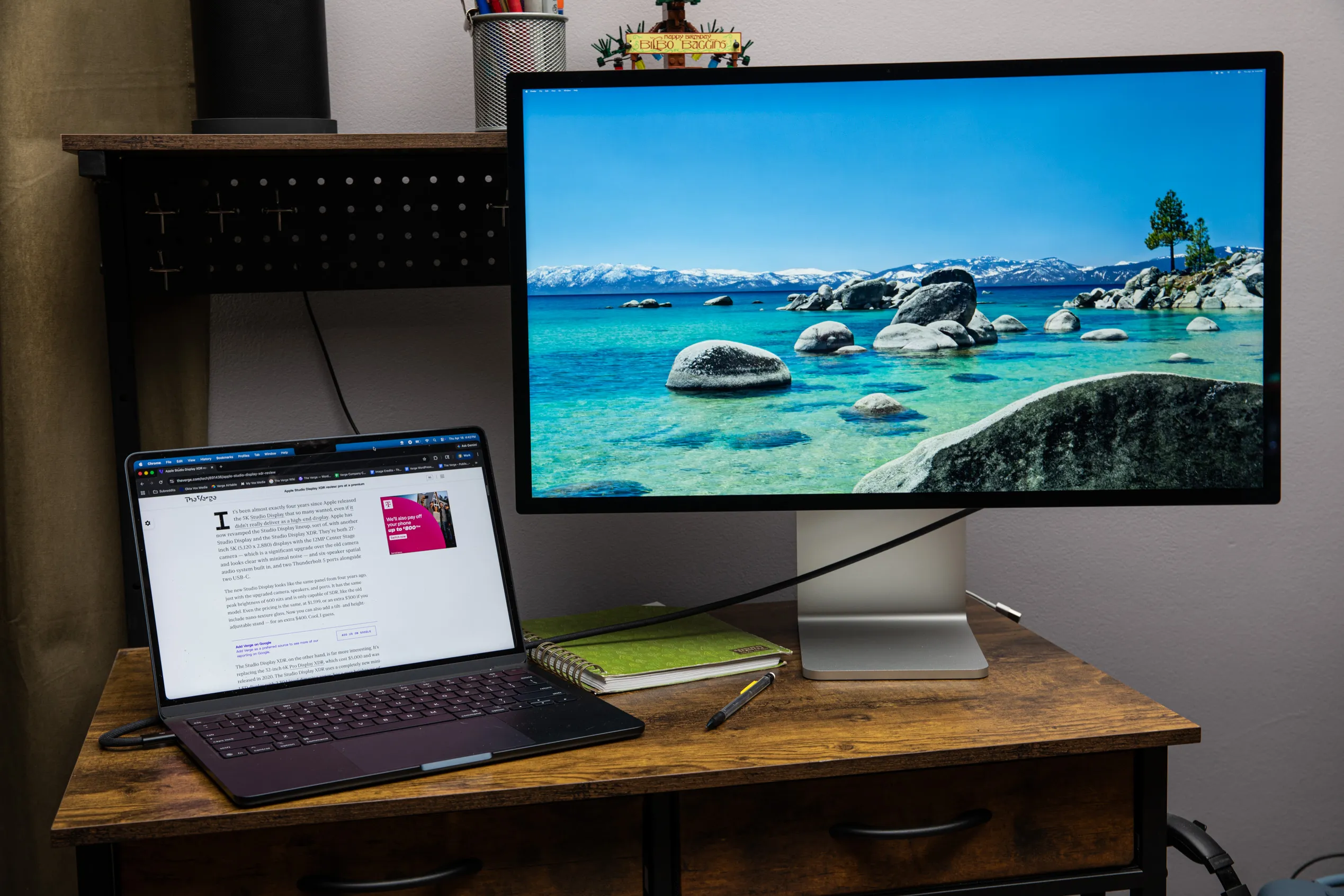
Once the undisputed leader in the 5K monitor market, Apple’s Studio Display is struggling to maintain its edge as it faces an influx of formidable competitors in 2026. With manufacturers like BenQ and Asus offering superior alternatives at significantly lower price points, many tech enthusiasts are questioning whether the $1,600 price tag for the Studio Display still justifies its features.
For over a decade, Apple enjoyed a monopoly on high-resolution displays, with the 27-inch iMac of 2014 drawing buyers primarily for its dazzling 5K screen. In 2022, Apple finally catered to consumer demand with the release of the Studio Display, which featured the same screen technology as the iMac but packaged in a standalone unit complete with built-in speakers and a webcam. However, the long-awaited competitors began to emerge late in 2024, shaking Apple’s once solid foothold in the market.
Despite its renowned metal chassis and aesthetic appeal, the Studio Display's limitations are becoming glaringly apparent. Competing monitors now offer more versatile adjustable stands, a wider array of connectivity options, and compatibility with multiple computers, including those running Windows. With prices ranging from $550 to $1,100, these alternatives are not only more functional but also more affordable than Apple’s offering.
Upgrades Come Too Late
In a bid to reclaim its status, Apple unveiled the upgraded Studio Display this year, but many are left unimpressed. The new model, while featuring an improved webcam and faster ports, clings to the same 12-year-old IPS panel. The more technologically advanced Studio Display XDR, priced at $3,300, introduces a mini-LED backlight capable of achieving up to 2,000 nits of brightness and a dazzling 120Hz refresh rate. Yet, this option may not cater to the average consumer looking for a high-quality display without breaking the bank.
Comparison with Competitors
A recent side-by-side comparison of the standard Studio Display against rivals like the BenQ PD2730S and Asus ProArt PA27JCV highlighted its shortcomings. For instance, while the color accuracy of the Studio Display shines, particularly in sRGB mode, its lack of deeper black levels and limited reflection handling became apparent. Monitors from BenQ not only matched, if not surpassed, the Studio Display in color fidelity but did so at a fraction of the cost, offering much more comprehensive calibration support.
Although the redesigned Studio Display does boast two Thunderbolt 5 ports, its overall performance still falls short against newer models. Users are left questioning whether Apple has responded adequately to the evolving demands of digital creatives or if they are merely resting on their laurels.
As Apple navigates this competitive landscape, the question remains: Can the tech giant reinvent its display offering to meet contemporary expectations?
Source: The Verge
Source: The Verge