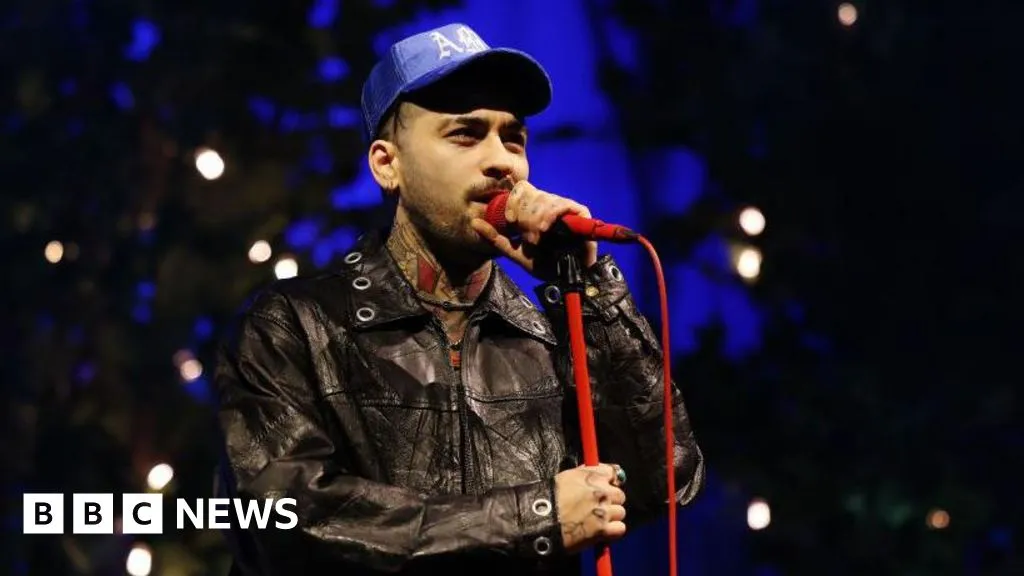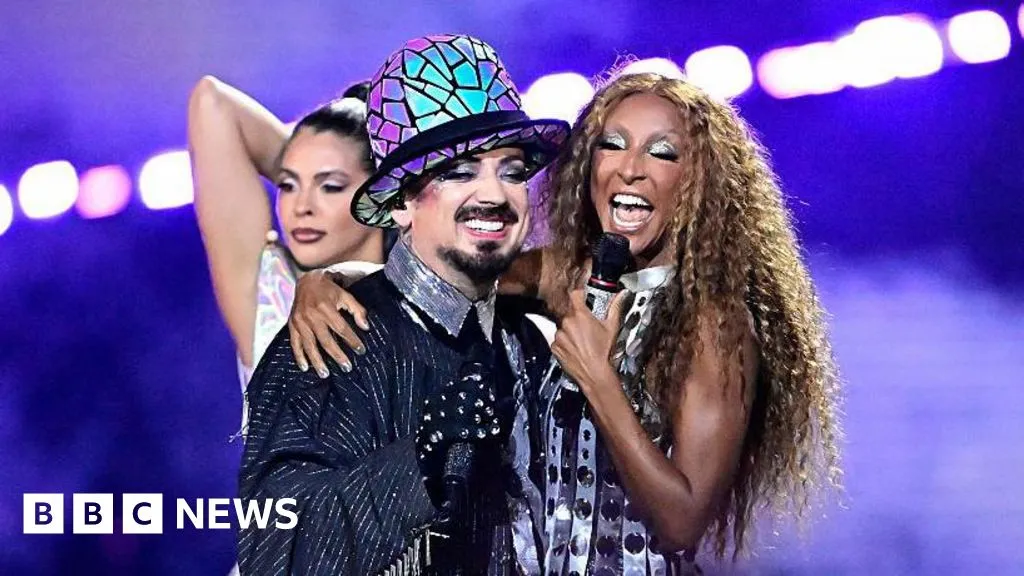
In a captivating evening at Vienna's Wiener Stadhalle, Israel’s Noam Bettan endured both cheers and jeers as he performed his lovestruck anthem "Michelle," ultimately securing a place in the Eurovision Song Contest finale. Meanwhile, British icon Boy George faced disappointment, as his guest appearance with San Marino’s act failed to resonate with voters, leading to their elimination.
The semi-final, marked by a sharp divide among the audience, saw Bettan's performance elicit a wave of boos interspersed with fervent support, reflecting the ongoing tensions stemming from Israel's military actions in Gaza. The controversial political backdrop has resulted in boycotts from five participating countries, including Eurovision’s historic powerhouse, Ireland.

As Bettan took the stage, he remained undeterred by the negativity, telling the Jerusalem Post ahead of his performance that he intended to immerse himself in the music, dismissing any hostile sentiments as mere "background noise." His resolve was notably tested during the broadcast when an audience member vocally expressed anti-Israeli sentiments, prompting a swift response from security forces who escorted the protestor out.
Following the performance, the Austrian broadcaster ORF and the European Broadcasting Union (EBU) confirmed that additional disruptive attendees were also ejected from the venue, illustrating the heightened emotional climate surrounding this year's contest.
The night concluded with ten acts successfully moving on to the grand finale scheduled for Saturday. Other contenders include Finland’s beloved duo Pete Parkonnen and Linda Lampenius, whose passionate ballad "Liekinheitin" has emerged as a frontrunner for victory.
Regrettably for fans of Boy George, the Culture Club legend’s foray into Eurovision did not yield success; his collaboration with San Marino fell short, adding to the storied drama of this year's competition.
As the event nears its culmination, a second semi-final will take place with 15 more nations vying for a coveted spot in the grand finale. Automatic qualifications have been granted to Austria along with the four largest financial contributors—France, Germany, Italy, and the United Kingdom.
This year's Eurovision not only celebrates its musical diversity but also underscores the complex interplay of politics and art, a theme that seems set to shape the festival's legacy for years to come. As tensions continue to simmer, the world watches closely, with Eurovision's organizers proclaiming they are monitoring voting closely in light of the competition's current context.
As the stage is set for a weekend filled with music and spectacle, audiences await what promises to be an exhilarating finale that will resonate politically and artistically.
Source: BBC News
Source: BBC Entertainment