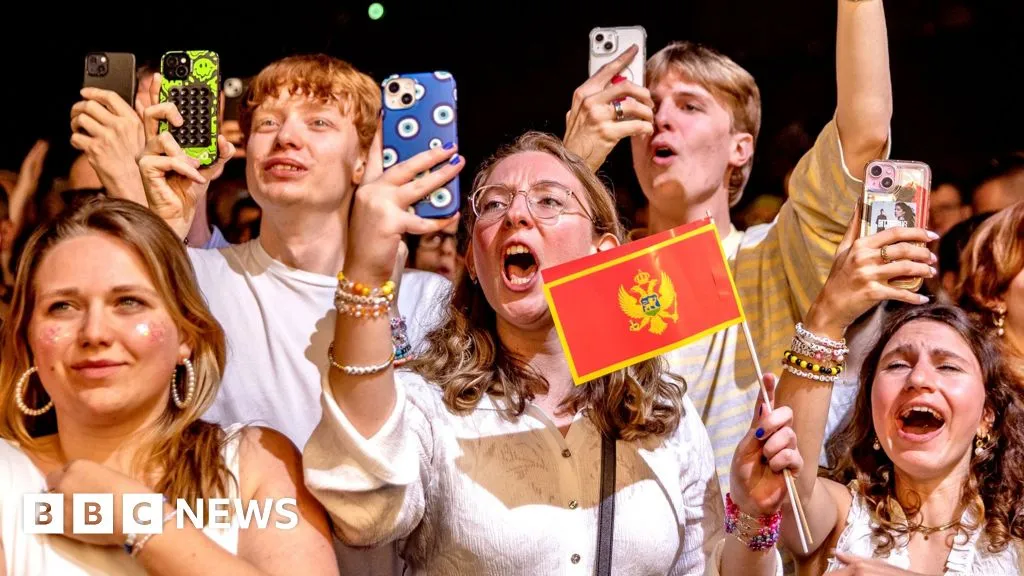
The Eurovision Song Contest, a dazzling spectacle of music and culture, finds itself entangled in a precarious web of political controversy as the 2026 edition kicks off in Vienna. The annual event—marking its 70th anniversary—is overshadowed by significant withdrawals, including nations like Spain and Ireland, in protest over Israel's participation amid ongoing hostilities.
Boycotts Over Political Tensions
As delegations from 35 countries gather this Sunday for the much-anticipated "turquoise carpet" parade, the absence of prominent competitors such as Iceland, the Netherlands, Slovenia, and Spain raises concerns about the cohesion of a festival historically grounded in unity and celebration. The uproar reflects deep divisions among fans, many of whom are grappling with their loyalties in light of Israel's contentious military actions in Gaza that escalated following a Hamas attack in October 2023, resulting in devastating casualties.
Since then, the conflict has claimed numerous lives, with Israeli sources citing approximately 1,200 casualties from the initial attack, while Palestinian health authorities report over 72,000 deaths due to the ongoing offensive. Although a ceasefire was reached in October 2025, the atmosphere remains charged as protests continue to disrupt the festivities.
Historical Context and Recent Developments
Past Eurovision events have witnessed protests erupting in Malmö and Basel, with armed security assigned to protect Israeli participants. Last year, contestant Yuval Raphael, a survivor of the attacks, became the focus of tension when she performed her song, "New Day Will Rise". Her unexpected success sparked accusations from rival countries who alleged political manipulation during the voting process, leading to heightened scrutiny of Israel's role in the contest.
Despite attempts in November to vote on Israel's status in Eurovision, dissenting voices opted for withdrawal rather than confrontation, culminating in the loss of some of the contest's largest financial backers.
Fans Torn Amidst Controversy
The Eurovision fan community, integral to the contest's identity and economy, now finds itself divided. Renowned for their vibrant engagement, fan sites are questioning their allegiance. The team behind Eurovision Hub expressed their disillusionment, stating, "The Eurovision we once knew, that shaped this community, just isn’t the one we fell in love with all those years ago." Meanwhile, fellow site Eirevision echoed sentiments of loss over a contest that once embodied unity and connection.
While some fans have chosen to suspend coverage of the event, others are exploring alternative avenues for participation. Welsh journalist Philip Dore addressed the community in a thoughtful article, acknowledging the contest's profound connections to identity and advocate for inclusivity while outlining various stances, from a total boycott to a more measured approach of engaging until the event unfolds in Vienna.
As the discord continues to simmer, the Eurovision Song Contest faces one of its most challenging moments. Will the celebration of music survive these turbulent waters?
As the curtain rises in Vienna, the outcome may not only shape the future of Eurovision but also redefine the very essence of what it means to unite nations through music.
Source: BBC News
Source: BBC Entertainment