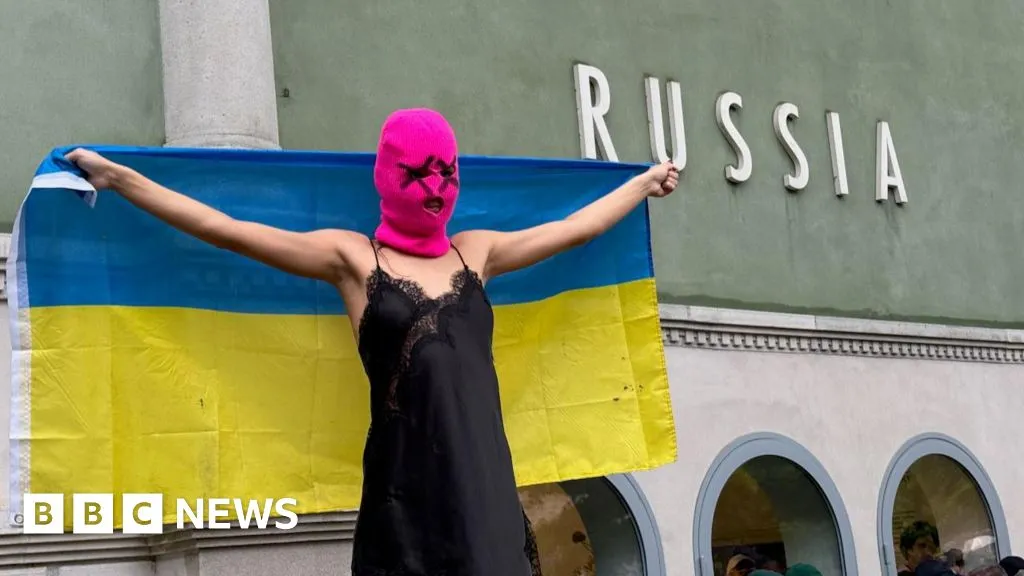
The Venice Biennale, a renowned cultural showcase, has become a battleground for protest as the presence of Russia at this year's event ignites fierce backlash. Activist groups, notably the punk collective Pussy Riot and Ukraine's Femen, have staged dramatic demonstrations outside the Russian pavilion, marking the country's return to the prestigious arts fair for the first time since the onset of the Ukraine conflict.
With an urgent message against Russia’s participation, activists clad in black and bright pink balaclavas unleashed their dissent, declaring, "Russia kills! Biennale exhibits!" The demonstration captured attention with smoke flares and bold placards stating, "Curated by Putin, dead bodies included." As these protests unfolded, Nadya Tolokonnikova of Pussy Riot emphasized the cultural ramifications of Russia’s involvement, framing it as an extension of its military aggression: "It’s not just tanks and drones; it’s a fight for culture and influence in the West." 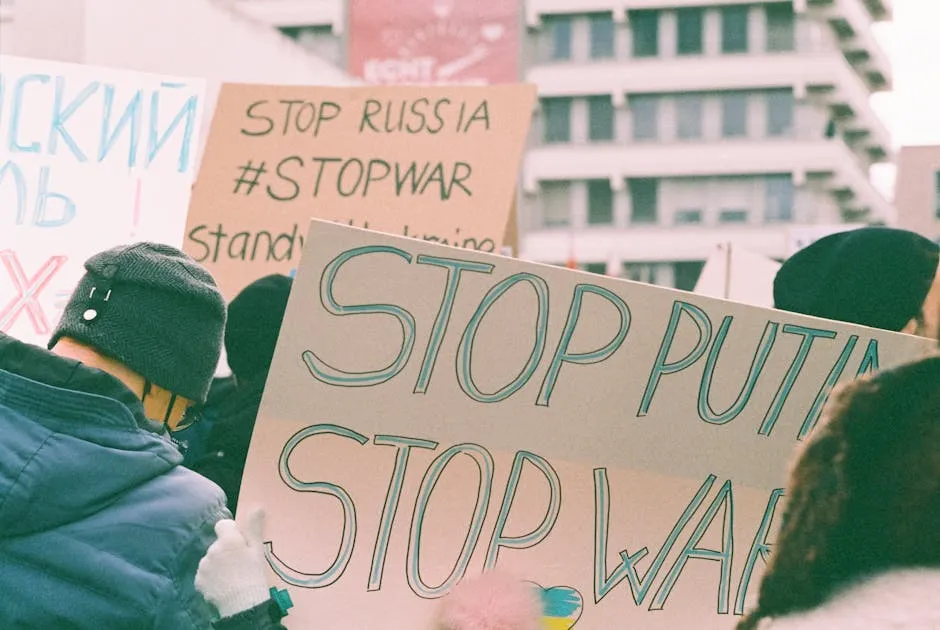
Political Fallout and European Commission's Response
The decision to reinstate Russia at the Biennale has stirred unease among political leaders, prompting the European Commission to condemn the move. It has threatened to withdraw €2 million in funding, arguing that allowing "the aggressor, Russia, to shine on such a platform" clashes with ethical standards. Italy's Culture Minister has announced he will not attend the Biennale, reflecting the complex diplomatic tensions surrounding the event.
In stark contrast, Italy’s Deputy Prime Minister Matteo Salvini has denounced the boycott efforts, asserting that no pavilion should be excluded from the event. This divergence in political stance highlights the ongoing debate about how cultural events intersect with international conflict.
A Broader Atmosphere of Tension
The controversy extending beyond Russia intensified when the entire international jury resigned in protest of the Biennale's previous editorial choices that linked countries like Russia and Israel with leaders accused of war crimes. In an additional layer of protest, demonstrators targeted the Israeli pavilion, branding it a "Genocide Pavilion" in response to the ongoing conflict in Palestine.
As criticism mounts, the Biennale's president, Pietrangelo Buttafuoco, has remained largely silent on the uproar, only briefly addressing the situation by labeling the protests a "laboratory of intolerance." His remarks that the Biennale should not exclude participation based on affiliations revealed a contentious stance that disregards the widespread sentiments of the protestors.
Imagined Spaces and Artistic Responses
In a symbolic act, posters displaying imaginary events featuring Ukrainian artists killed in the war emerged throughout Venice, underscoring the personal cost of the conflict. The posters, stamped with the word "Cancelled", serve as chilling reminders that the arts cannot be divorced from the realities of violence and conflict.
The Venetian gardens, historically a platform for international artistic exchange, have taken on a new significance as Russia showcases its cultural offerings amid allegations of exploitation and propaganda. While the Russian pavilion this year features an upside-down tree and experimental sounds, questions about the integrity of cultural diplomacy in times of war linger, leaving audiences to grapple with the intersection of art, politics, and morality.
As the Venice Biennale unfolds, it stands not only as a celebration of artistic achievement but also as a profound reflection of the geopolitical landscape—a stage where art and activism collide.
Source: BBC News
Source: BBC Entertainment