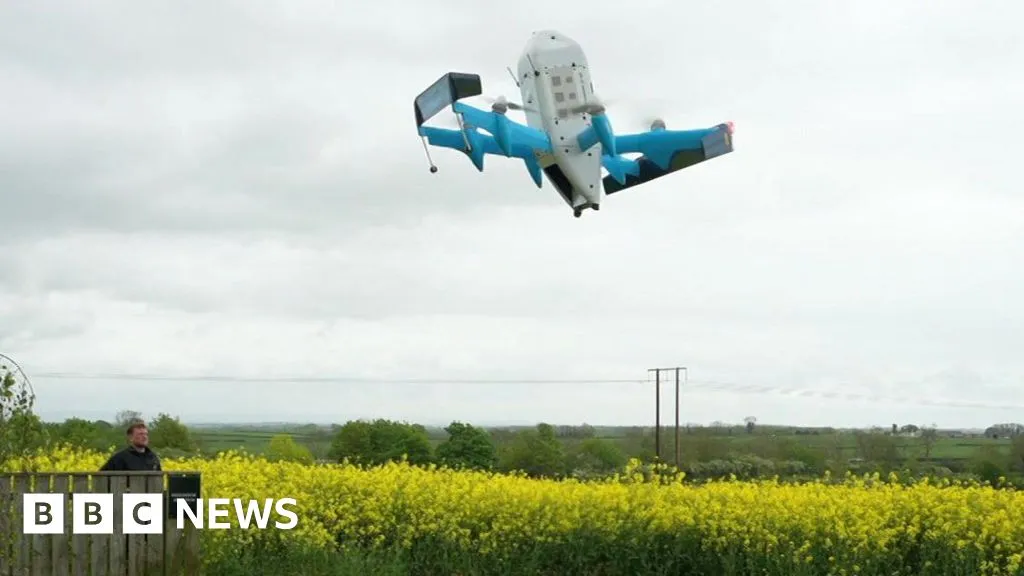
In a groundbreaking move, Amazon has officially launched its first drone delivery service in the UK, allowing the company to deliver parcels directly to customers' homes in Darlington, County Durham. This innovative initiative, which marks a new chapter in logistics and delivery, promises to revolutionize the speed and convenience with which everyday items reach consumers.
The unmanned aerial vehicles, capable of delivering 100 packages daily, operate within a 7.5-mile (12 km) radius of Amazon's fulfillment center. Designed for small parcels weighing less than 5 pounds (2.2 kg), this service includes common household items such as beauty products, batteries, and cables.
Rob Shield, one of the first customers to experience this cutting-edge service, initially treated the deliveries as a novelty. "We had people come just to see it," he shared, recalling the excitement that surrounded those early test deliveries. As he experimented with various orders—ranging from chocolates to essential tools like tape measures—he quickly came to appreciate the efficiency this service offered.
"Since then, I've found myself ordering things I actually need, like rubber gloves and other supplies that tend to go missing around the house," he said. This ease of access resonates with Amazon's belief that the demand for rapid, reliable deliveries is stronger than ever.
David Carbon, Vice President of Amazon Prime Air, emphasized, "People have never told us they want their items slower. When you have children needing medication, you don't want to waste time driving to the store." While the drones currently deliver within two hours in the UK, Carbon noted that the average delivery time in the U.S. stands at just 36 minutes, suggesting significant potential for expansion.
Amazon's drone service will execute a maximum of ten flights per hour, facilitating up to 100 deliveries on weekdays. However, experts caution that while Darlington presents an intriguing case study, urban environments may present challenges for such delivery methods.
Dr. Anna Jackman, an associate professor of geography at the University of Reading, stated, "Many urban areas are densely populated and congested, making drone deliveries less effective, particularly in tall buildings. While there are plans for rooftop deliveries, that technology is not yet viable for widespread use." In Darlington, potential customers will need sufficient outdoor space, such as a garden or yard, for successful drone deliveries.
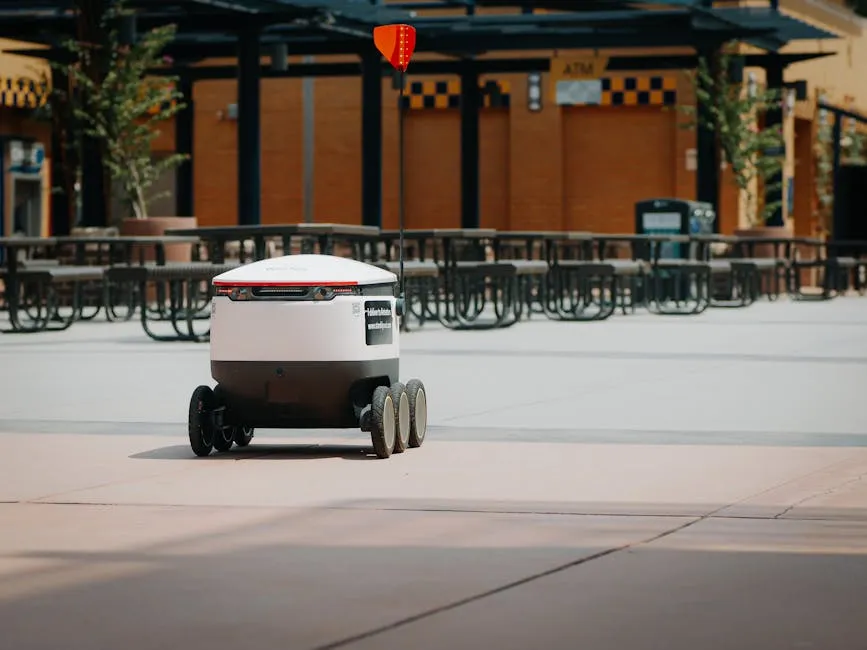
Notably, drones have already begun operating within the NHS to transport blood supplies in London and are being utilized by Royal Mail to reach remote communities in Orkney. Amazon is deploying its most advanced drone, the MK30, designed with advanced sensors to navigate obstacles like trampolines, washing lines, and even other aircraft. This level of sophistication allows for precise package drop-offs, an essential feature for ensuring safety and reliability.
However, the journey to reliable drone deliveries has not been without its hurdles. In February, an MK30 drone in Texas veered off course due to a lost GPS signal and struck a building, although thankfully no injuries occurred. Carbon described this incident as a learning experience for Amazon, emphasizing the importance of safety in its operations. With over 170,000 successful drone flights under its belt, Amazon is steadily enhancing its delivery technology.
As this pioneering service unfolds in Darlington, it raises important questions about the future of drone deliveries beyond visual line-of-sight (BVLOS) operation. Amazon's commitment to ensuring that trained operators monitor the drones remotely while collaborating with local air traffic controllers is pivotal for safe and efficient operation.
Why Darlington? The town is uniquely positioned as the only location outside the United States currently piloting Amazon's drone delivery service, chosen for its suitability in testing this transformative logistics model.
Source: BBC Business