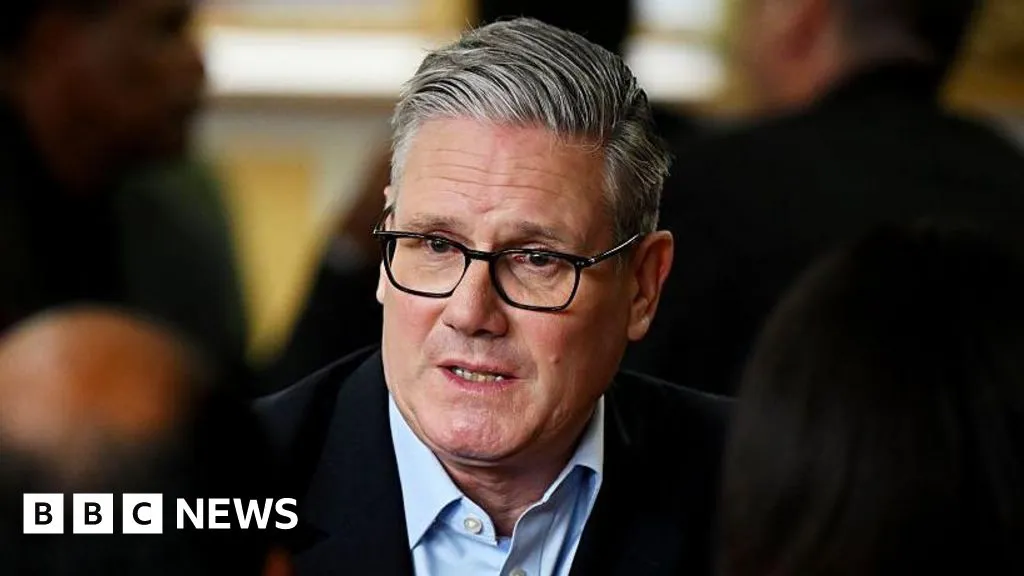
UK borrowing costs have surged dramatically amid escalating uncertainty regarding Prime Minister Sir Keir Starmer's leadership, prompting fears among investors and sending bond yields soaring. On Tuesday, the effective interest rate for 10-year government bonds hit 5.13%, a level not seen since the 2008 global financial crisis.
Speculation surrounding a potential leadership change has unnerved financial markets, particularly as the ongoing Iran war threatens to exacerbate inflationary pressures. Concerns are mounting that a pivot in governance could lead to more aggressive public spending, alarming some investors already grappling with rising costs.
Approximately 80 Labour MPs have called for Sir Keir Starmer to step down following lackluster election results, yet the Prime Minister remains resolute. "The Labour Party has a process for challenging a leader and that has not been triggered," Starmer stated during a cabinet meeting, urging colleagues to focus on governance. Some members expressed their continued support for his leadership, advocating stability amid unrest.
While governments worldwide have faced increasing borrowing costs since the onset of the Iran war, the UK stands out with rates notably higher than its economic counterparts. Investor focus has shifted to the implications of Starmer’s potential successors, as market analysts speculate that those who may take his place could veer towards looser fiscal policies.
Both Starmer and Chancellor Rachel Reeves have maintained a firm commitment to stringent borrowing regulations, aiming to reassure markets of their fiscal prudence. However, analysts from Capital Economics warn that a change in leadership could lead to elevated borrowing costs and a weakened pound. They foresee that frontrunners such as Andy Burnham, Angela Rayner, and Wes Streeting might prioritize increasing public spending.
The mechanism of government finance typically relies on tax revenues, which often fall short of expenditures, necessitating government borrowing through bonds. Investors expect a certain level of stability and reliability in return for their loans; however, Tuesday saw a notable increase in yields across the board, with 30-year bond yields rising to 5.80%, the highest since 1998. As the threat to Starmer's leadership looms large, the yield on benchmark 10-year gilts has become a barometer for economic confidence.
Adding to the tumult, the UK’s primary stock index, the FTSE 100, fell by 0.5%, driven down by shares of British banks amid fears of a potential tax overhaul under new leadership. The pound also took a hit, slipping 0.5% against the dollar to $1.35. "Elevated oil prices are adding further inflationary pressure to a bond market already skittish about changes in leadership," noted Anna Macdonald, investment strategy director at Hargreaves Lansdown, warning that overseas investors—who represent 25-30% of UK government bond buyers—may demand higher risk premiums.

As the public debt burden continues to escalate, accounting for approximately £1 of every £10 in government spending, the stakes remain high for the UK’s fiscal landscape. With investors closely monitoring developments, the future of the nation’s economic policy hangs in the balance, as concerns about leadership instability and its potential impact on fiscal discipline intensify.
Source: BBC Business