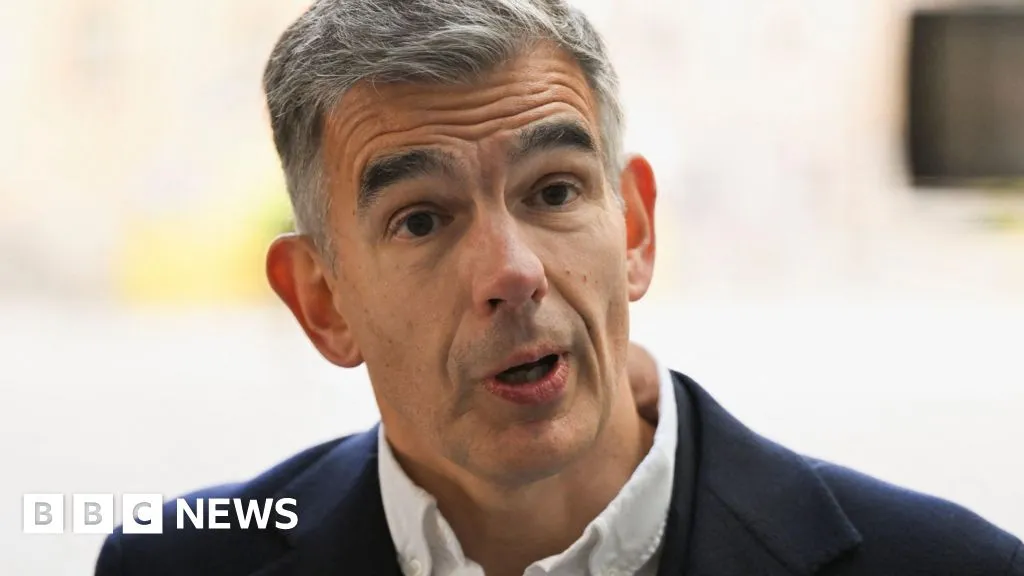
In a decisive call to action, Matt Brittin, the newly appointed Director General of the BBC, articulated the manifold challenges facing the broadcaster, declaring that "tough choices are unavoidable" as the organization grapples with a looming £500 million deficit.
Trust and Transformation
During his inaugural address at the BBC's New Broadcasting House, Brittin, a former Google executive, underscored the broadcaster's crucial role in today's media landscape, stating, "The BBC has never been more needed." However, he cautioned staff that substantial cuts are on the horizon, with as many as 2,000 jobs potentially at risk.
“The BBC has proven throughout its history how quickly it can adapt to the ever-changing media environment. We must once again channel that spirit of urgency,” he emphasized, pointing to the institution’s storied past of innovation during crises such as World War II and the COVID-19 pandemic.
Confronting Controversies
Brittin steps into his role following the resignation of Tim Davie, whose departure was driven by controversy surrounding a Panorama documentary that misrepresented a statement by former U.S. President Donald Trump. The BBC is currently embroiled in legal battles as Trump seeks damages, framing the issue as part of a broader struggle against perceived impartiality.
A Call for Innovation
In an email to BBC staff, Brittin articulated his vision for the future, advocating for storytelling that resonates with modern audiences. “We need to ensure we are delivering content in formats that appeal across various platforms. Our audience demands this adaptability,” he stated, highlighting the need for a shift towards digital-first content.
Dame Caroline Dinenage, head of the House of Commons Culture, Media and Sport Committee, remarked that Brittin faces significant challenges ahead during this turbulent phase for the BBC, with his annual salary pegged at £565,000.
Meeting Digital Demands
Industry insiders, like award-winning comedy producer Ash Atalla, emphasize the urgent need for the BBC to evolve from a traditional broadcast-first organization to a more agile digital entity. “The BBC is fantastic at television, but it needs to enhance its digital presence to connect effectively with younger audiences,” Atalla noted. He warned that younger generations may not share the same nostalgia for the BBC, making it imperative for the broadcaster to innovate rapidly.
As Brittin forges ahead, details regarding service cuts and structural changes remain under wraps, raising questions about the future implications for the BBC's comprehensive role in public broadcasting. The organization must also navigate the complex negotiations ahead regarding the renewal of its royal charter, which governs its funding and operational mandates, set to expire in 2027.
The coming months will be crucial as Brittin attempts to realign the BBC with the expectations of its diverse audience while managing internal unrest, underscoring a pivotal moment for one of the world's most treasured broadcasting institutions.
Source: BBC News
Source: BBC Entertainment