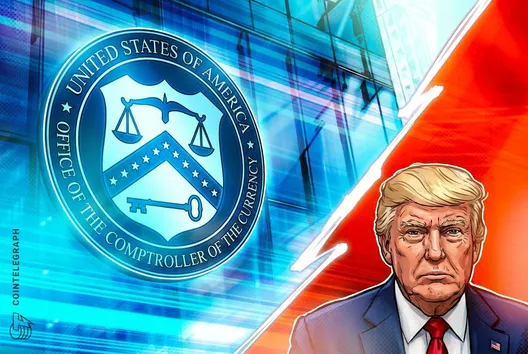
At a charged oversight hearing on Thursday, U.S. Comptroller of the Currency Jonathan Gould found himself at the center of a political storm as Representative Gregory Meeks questioned his impartiality regarding a trust charter application linked to World Liberty Financial, a cryptocurrency venture tied to Donald Trump's family.
The contentious exchange during the House Financial Services Committee session saw Meeks accusing Gould, a Trump appointee, of acting as the president's 'fixer' in processing the application for World Liberty, co-founded by Trump and his sons. The scrutiny intensified as allegations surfaced about the company’s connections to foreign governments and the controversial Binance exchange, raising red flags among Democratic lawmakers.
“This company actively lines the pockets of the president’s family,” Meeks asserted, pushing for transparency and fairness in the charter application process. He demanded Gould demonstrate that he remains committed to serving American interests rather than acting in service of the Trump family's financial pursuits.
“Your attempts to continue to pressure me are the only political pressure I’ve felt from anyone other than your Senate colleagues,” Gould countered, dismissing suggestions of favoritism. He called the situation “unfortunate and unprecedented” as his tenure at the Office of the Comptroller of the Currency (OCC) begins to draw scrutiny due to its connections with the previous administration.
The OCC has already approved or conditionally agreed to several national trust charter applications from major crypto firms, including Coinbase and Ripple, underscoring its broader mandate to regulate financial institutions engaged in digital asset markets. Gould, who took office in July 2025, affirmed his commitment to an 'apolitical and nonpartisan' review process, although critics, including Massachusetts Senator Elizabeth Warren, have highlighted potential violations of federal banking laws in granting approvals to other crypto entities.
Approval for a national trust bank charter would enable such companies to offer services with reduced regulatory constraints compared to traditional banks, and the stakes remain high as World Liberty’s application progresses.
Furthermore, the political landscape is shifting with the anticipated Senate vote on the comprehensive CLARITY Act, a legislation expected to reshape the digital asset market framework. Treasury Secretary Scott Bessent expressed optimism about the bill's passage this summer, potentially changing the regulatory climate amidst ongoing debates around crypto governance.
The outcome of these hearings and legislative actions could significantly impact the future of cryptocurrency regulation in the U.S., as lawmakers grapple with the challenges posed by rapidly evolving financial technologies.
Source: Cointelegraph