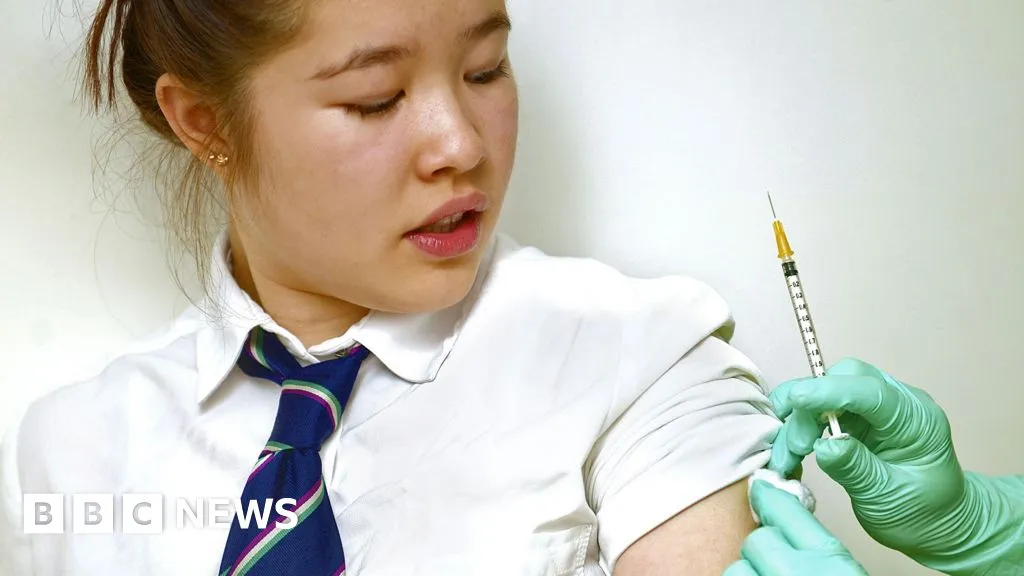
A groundbreaking study has revealed that young women vaccinated against human papillomavirus (HPV) now face an almost negligible risk of dying from cervical cancer, a remarkable public health achievement since the HPV vaccination program began in 2008.
Research conducted by Queen Mary University of London indicates that approximately 200 lives have been saved in England as a direct result of the HPV vaccine. Notably, between 2020 and 2024, there were no recorded deaths from cervical cancer in women aged 20 to 24—a historically unprecedented milestone. Experts estimated that without the extensive vaccination efforts, about 23 deaths in this age group would have been expected during that period.
The authors of the report anticipate further declines in mortality rates as more women receive the HPV vaccine and vaccinated cohorts age. Michelle Mitchell, Chief Executive of Cancer Research UK, underscored the significance of the findings, calling it an "incredible milestone" while urging for greater vaccination outreach. Current statistics reveal that vaccination rates in England are below the necessary levels, with only 76% of girls receiving the vaccine by age 15 in 2024-25, notably short of the 90% threshold recommended by the World Health Organization for eradication of cervical cancer.
Mitchell stressed the importance of targeted actions to enhance immunization rates within communities lacking adequate uptake: "We know the HPV vaccine is extremely effective at stopping cervical cancer before it starts, and for the first time, these findings show it is saving lives."
Personal Stories and Ongoing Challenges
Advocating for the vaccine is Alexandra Legg, who, after missing the vaccination initiative due to her school schedule, faced cervical cancer at the age of 30. "I remember hearing the words and I just couldn’t really breathe very well,” she recalled of her diagnosis before her wedding in 2021. Despite significant health challenges—including the removal of lymph nodes—Legg gave birth to a daughter she named Ivy, after surviving the ordeal. Now, she encourages others to seize the opportunity for vaccination to avoid her fate.
Echoing this sentiment, Professor Sasieni described the reduction in deaths due to the HPV vaccine as merely the "tip of the iceberg." He added, "As vaccinated generations grow older, we’ll see many more lives saved from cervical cancer." Nevertheless, a reminder persists: women aged 25 to 64 are still encouraged to participate in cervical screening programs, in conjunction with vaccination efforts.
The Department of Health and Social Care has acknowledged the transformative impact of the HPV vaccination program while committing to enhance vaccine uptake amid ongoing challenges. The UK is steadfast in its goal to eliminate cervical cancer as a public health concern by 2040, yet the path ahead demands substantial effort to boost vaccination participation.
As vaccination strategies evolve, the potential for saving lives escalates, highlighting the critical intersection of science, policy, and individual health choices in the fight against cervical cancer.
Source: BBC Health