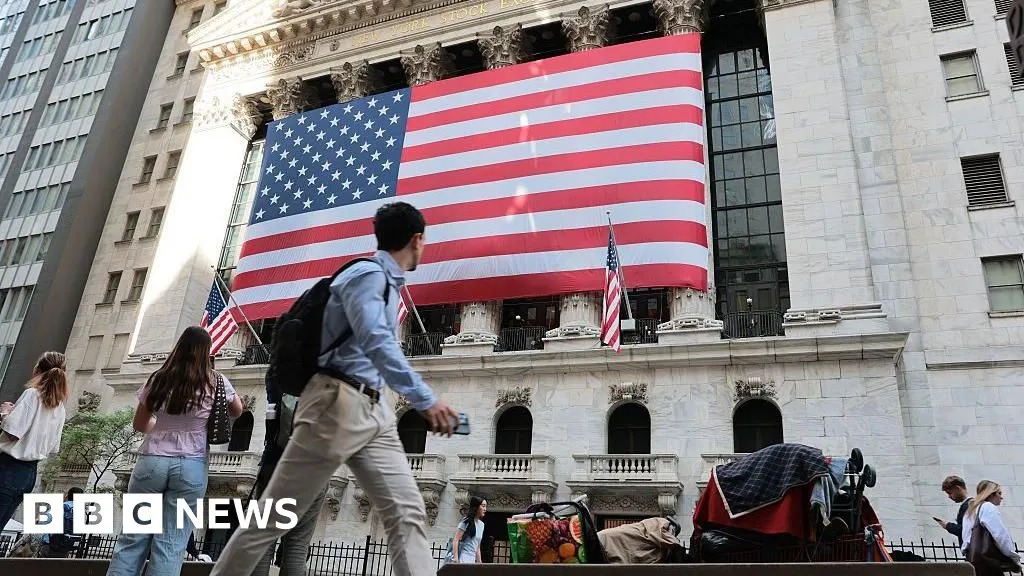
As global markets grapple with mounting economic challenges, the U.S. economy has emerged as an unexpected fortress, continuing to outpace its international peers amidst geopolitical turbulence and financial upheavals. This resilience prompts an urgent inquiry: how has the American economy defied expectations?
A Tale of Contrasting Fortunes
This puzzle takes stark form when juxtaposed with powerful industry parallels. In late 2025, production ceased at Volkswagen's 'Transparent Factory' in Dresden, a symbol of European industrial prowess. Meanwhile, across the Atlantic in Spartanburg, South Carolina, BMW operates its largest plant globally—an embodiment of American manufacturing prowess thriving against the odds.
Breaking Down Barriers
In recent years, the economic landscape has been besieged by a series of shocks. From the trade tariffs implemented during the Trump administration that potentially threatened American industries, to the tumultuous geopolitical climate affecting oil prices, many analysts forecasted a downturn. Yet, contrary to these projections, the U.S. economy has continued its steady growth, reporting an annualized expansion rate of approximately 2%.
A Robust Response to Trade Wars
Joe Brusuelas, chief economist at RSM, posits that the U.S. response to trade barriers reflects an underlying economic dynamism. “The trade war became a testament to American resilience,” he asserts. Companies, facing heightened costs from foreign tariffs, pivoted not by reducing margins, but by intensifying capital investment—their capital expenditure now constitutes 13.9% of U.S. GDP.
Energy’s Role in Economic Stability
Energy markets provide another lens through which to examine this unexpected resilience. The ongoing Middle Eastern conflict has undeniably pushed oil prices higher, historically a red flag for the U.S. economy. However, the advent of the shale revolution has transformed America into one of the world’s leading oil and gas producers, lessening its vulnerability to external energy shocks. In contrast to Europe’s dependency on long-term contracts, American businesses have adapted to market fluctuations, which greatly mitigates potential economic downturns.
Culture of Calculated Risk
Cultural attitudes towards risk also play a significant role. Rebecca Christie, a senior fellow at the Brussels think tank Bruegel, observes a marked difference between American and European perspectives. “Americans tend to be more solutions-oriented and comfortable with short-term risks for long-term gains,” she notes, contrasting this with Europe's more cautious approach. This cultural mindset fosters an environment where innovation and entrepreneurship can flourish, enabling businesses to capitalize on diverse financing options—from venture capital to stock market investments.
Inequality Lurking Beneath Resilience
Nevertheless, Christie warns that while macroeconomic indicators signal resilience, they may obscure underlying inequalities. “The U.S. is a land of significant disparity,” she cautions. The labor market's incremental job growth may not alleviate the burdens faced by many struggling workers, highlighting a critical tension within the overarching economic narrative.
As the U.S. economy navigates these choppy waters, its ability to adapt, innovate, and absorb shocks presents a complex yet compelling picture of modern economic resilience.
Source: BBC Business