In a landmark shift for prostate cancer treatment in England, thousands of patients will now benefit from an advanced radiotherapy technique that drastically reduces treatment sessions from 20 to just five. This pioneering approach, known as SABR (stereotactic ablative radiotherapy), promises to enhance the efficiency of care while minimizing side effects associated with traditional treatment options.
Precision Treatment Transforms Patient Experience
Senior medical professionals heralded the implementation of SABR as a game changer in oncology, particularly for men diagnosed with low- and intermediate-risk prostate cancer. Currently, around 55,000 men receive a prostate cancer diagnosis each year in the UK, with approximately 17,500 categorized as low or intermediate risk. This innovative technique, which has previously been employed for other cancer types such as lung and brain tumors, is now being extended to a broader demographic of prostate cancer patients outside clinical trials.
Projected uptake of this state-of-the-art treatment is estimated at around 3,500 patients, although some may opt for active surveillance instead of immediate intervention, given the slow-growing nature of low-risk prostate cancers.
Immediate Implementation Across the NHS
NHS England announced that all 48 radiotherapy centers across the nation are expected to offer SABR therapy in the coming weeks. Professor Peter Johnson, the National Clinical Director for Cancer, emphasized the potential of this method to deliver precise radiation directly targeting tumors, thereby preserving healthy tissue and expediting recovery for patients. "This technology allows us to focus a powerful and precise beam of radiotherapy directly onto the cancer, limiting the damage to healthy cells," he explained. "The fact that it can be delivered in 15 fewer doses will help men resume their everyday lives far more quickly."
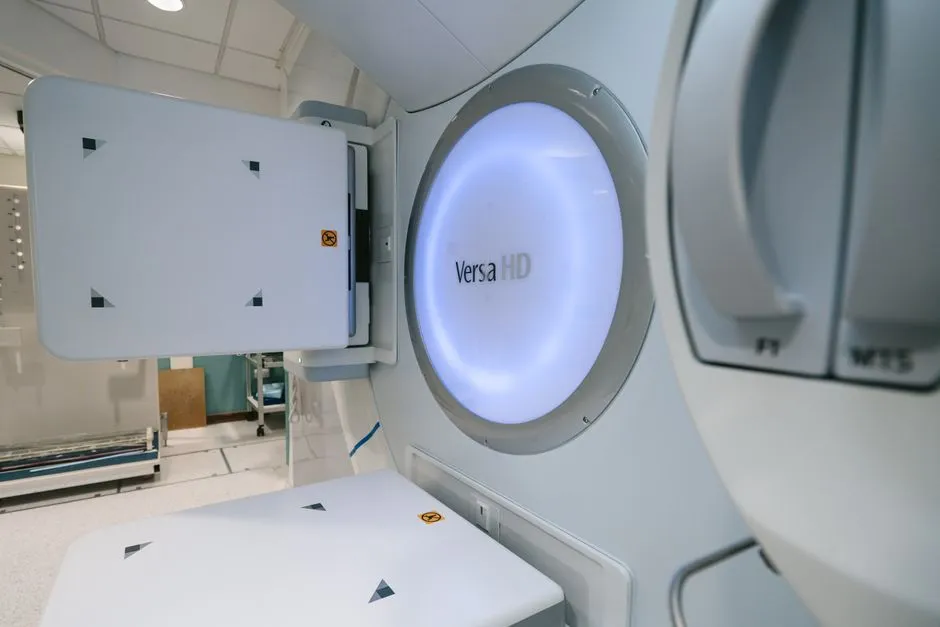
" alt="Advanced radiotherapy treatment">
Impact on Patients and Future Prospects
Amy Rylance, representative of Prostate Cancer UK, expressed enthusiasm for the expanded access to this revolutionary treatment, noting its potential to significantly reduce the heavy burdens cancer imposes on affected individuals and their families. The charity remains optimistic that future trials will extend the use of SABR to high-risk prostate cancer patients, paving the way for even broader application.
Edwin Lambert, a 70-year-old participant in one of the trials, provides a poignant personal account of the advantages of the new treatment. After being diagnosed in January 2025 and undergoing hormone therapy—with side effects that included fatigue and mood swings—Lambert experienced the targeted radiotherapy firsthand. He shared how the treatment felt "easier to deal with" compared to traditional methods, where he witnessed fellow patients suffering from significant adverse effects.
Despite a brief period of increased urination following his treatment, Lambert was able to re-engage in an archaeological dig he had planned, reflecting on his rapid return to normalcy. "This treatment was an absolute godsend," he remarked, encapsulating the optimism surrounding this transformative approach to prostate cancer therapy.
As this advanced technique becomes mainstream within the NHS, it heralds a new era in the fight against prostate cancer, with patients poised to experience not only improved outcomes but also a better quality of life.
Source: BBC Health