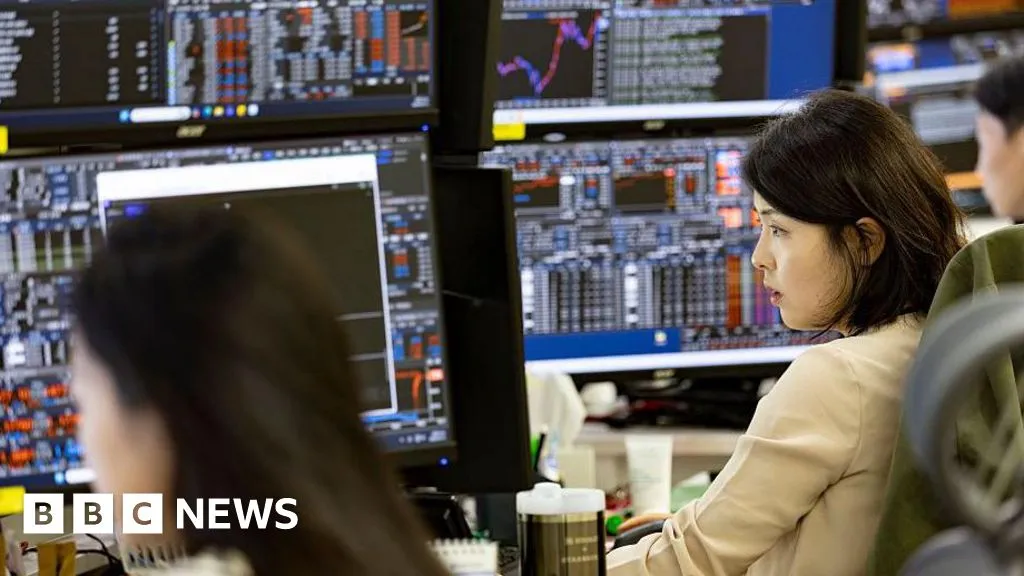
South Korea's stock market was abruptly halted for 20 minutes on Monday after a stunning plunge of nearly 9% in the Kospi index at the opening bell, marking a significant moment in Asian finance as traders grappled with the fallout from both global market pressures and renewed Middle East hostilities.
The trigger for this drastic market response was a sell-off in technology stocks that had previously enjoyed a robust rally, especially in the realm of artificial intelligence. As shares of major tech firms including Samsung and SK Hynix sharply declined, Japan’s Nikkei 225 index followed suit with a robust 4% drop, its largest in three months. The ripple effects of such losses were felt across the region, with indices like the Hang Seng and Shanghai Composite also registering declines.
In the backdrop of these market woes, a resurgence of conflict between Iran and Israel—who exchanged strikes for the first time since a ceasefire agreement was reached earlier this year—has sent oil prices soaring. Brent crude surged 3.7% to $96.50 per barrel, while US crude climbed by 3.5% to $93.70, igniting fears of inflation amid an already precarious economic landscape.
The chief investment strategist at Saxo, Charu Chanana, described the current turmoil as a "messy mix" of factors, primarily centered on the tech sector’s vulnerabilities combined with rising energy prices. Investors appear to be repositioning their portfolios, driven by concerns that investments in artificial intelligence may have peaked. "The burden of proof has gone up; investors are now looking for clear indications that AI demand translates into real revenue," Chanana stated.
As trading resumed in South Korea after the circuit breaker was triggered, the Kospi index remained down by approximately 5%. President Lee Jae-myung commented on the volatility, expressing optimism that domestic stocks are still "slightly undervalued," despite the recent downturn.
Wall Street too experienced significant turbulence, with the Nasdaq composite plunging nearly 4% on Friday, marking its steepest decline in over a year. Investor anxiety has been fueled by expectations of possible interest rate hikes following a lower-than-anticipated unemployment rate and sustained inflationary pressures linked to ongoing geopolitical conflicts.
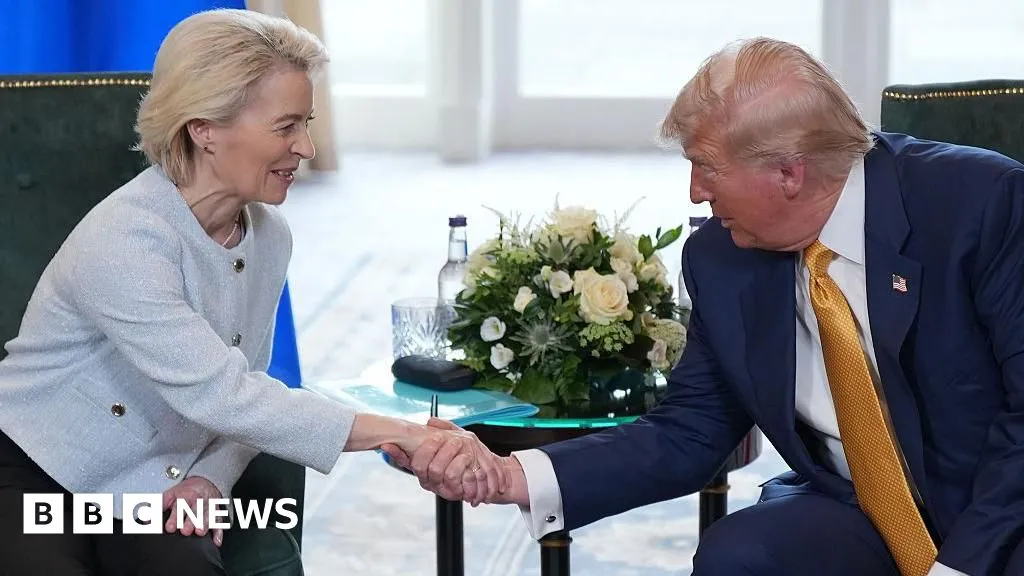
Meanwhile, the political landscape continues to be tumultuous. Tehran has cautioned that the recent strikes are only the beginning of a week of military actions in response to what they characterize as repeated violations of the April ceasefire. As tensions escalate, US President Donald Trump expressed concerns about the potential for further conflict, stating, "We are very close to a final deal with Iran. It is going to be a good deal. I don’t want it to blow up because of what is happening now," during an interview with Axios.
Analysis suggests that unless diplomatic efforts are successful, volatility in oil prices will likely persist, given the already strained global energy markets. With the conflict disrupting oil and gas shipments, traders remain vigilant, aware that any new developments could have profound implications for energy flows and economic stability moving forward.
Source: BBC News
Source: BBC Business