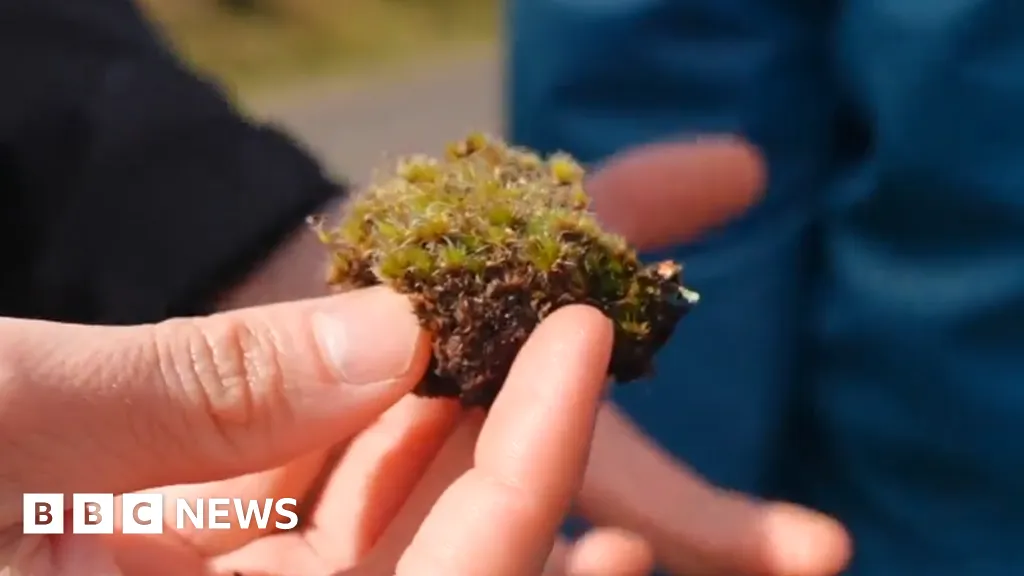
A groundbreaking discovery by British scientists has unveiled a new species of fungus, dubbed the 'killer fungus', that targets the invasive heath-star moss threatening native habitats across the UK. This organism not only promises to curtail the spread of a dominant non-native species but also stands as a beacon of hope for the restoration of valuable ecosystems.
The heath-star moss has rapidly proliferated throughout Britain and Europe, outcompeting native flora and adversely affecting biodiversity. Dr. George Greiff, the researcher who first identified the moss die-back fungus during a walk on the Isle of Wight four years ago, describes the urgency of this ecological crisis. "This moss is aggressive. I’ve even seen it growing in tarmac," Greiff notes, emphasizing the moss's invasive hold.
The fungus operates stealthily, infecting and killing the heath-star moss, thus paving the way for the revival of native plant species. During an expedition in Bannau Brycheiniog National Park, Greiff demonstrated the effects of the fungus, showcasing what he refers to as “fairy rings of death” – patches of desolate brown where the invasive moss has been eradicated.
More than 2,000 non-native plant and animal species, introduced either accidentally or deliberately, now inhabit Britain, with the heath-star moss identified as a particularly formidable invader. This moss, which most likely arrived from the southern hemisphere in the 1940s, has spread nearly unchecked, dominating ecosystems that once flourished with native moss varieties.
The Ecological Impact
The encroaching heath-star moss has drawn attention due to its explosion in numbers since the 1990s, outcompeting native species that are crucial for maintaining ecological balance. With over 1,000 types of moss in the UK serving as the backbone for vital habitats, the invasion of such aggressive species poses significant risks to temperate rainforests and peatlands—a critical carbon sink.
Dr. Greiff, working in collaboration with scientists from the UK and France, has meticulously studied and identified the fungus, revealing its close relation to the ash die-back fungus responsible for the death of millions of ash trees in the UK. The promise of the moss die-back fungus exemplifies nature's complexity; a seemingly destructive force can transform into a crucial ally.
Restoration and Future Hope
Observations of the fungus in situ suggest that its presence allows for the rejuvenation of native plant life, such as baby heather, in areas previously dominated by heath-star moss. Dr. Greiff anticipates that with continued research and monitoring, this fungus could dramatically alter the landscape of invasive species in Britain, a battle that environmentalists have long fought.
The stakes are high, as the delicate balance within Britain’s ecosystems hangs in the balance. As new findings emerge and public attention heightens, the discovery of the die-back fungus may signal a critical turning point in the ongoing struggle against invasive species, leading to healthier, more diverse habitats across the nation.
For further details, visit the .
Source: BBC Science