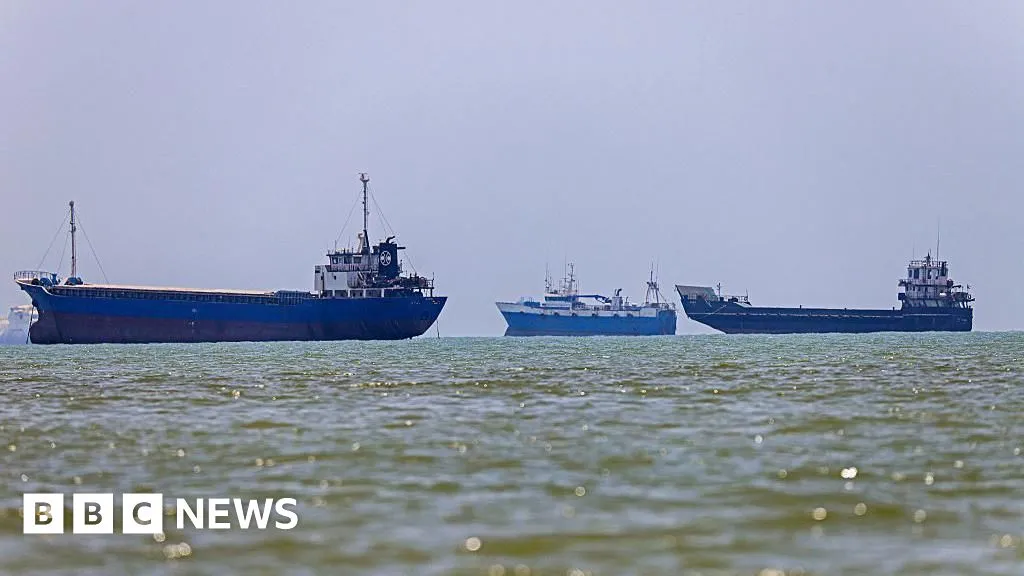
The geopolitical landscape in the Middle East is shifting dramatically as Iran has announced the closure of the Strait of Hormuz, a critical maritime chokepoint, in retaliation for ongoing Israeli airstrikes in Lebanon. This move is seen as a significant escalation in tensions, potentially impacting global oil markets.
Iran's Revolutionary Guard Corps Navy issued a stark warning: "Do not approach the Strait of Hormuz; otherwise, your security will be jeopardized." The Iranian government claims Israel's military actions in Lebanon are a direct violation of a recent agreement with the United States designed to halt hostilities in the region.
Historical Context and Immediate Reactions
This announcement follows a series of deadly Israeli airstrikes in southern Lebanon that reportedly resulted in the deaths of at least 20 civilians, undermining a newly announced ceasefire between Israel and Hezbollah. Since March 2, the health ministry in Lebanon has reported over 4,000 casualties, signifying the scale of the conflict's devastation.
In response, U.S. Central Command (Centcom) has stated that navigation through the Strait remains safe and commercial vessel traffic continues to flow, with 55 merchant ships reported transiting on the day of Iran’s announcement. However, it remains unclear if this data reflects traffic before or after the Iranian statement. “Safe passage remains intact,” asserted Centcom, amidst spiraling tensions.
Violation of Agreements and Escalating Conflict
Iranian officials have accused the U.S. of failing to uphold a crucial bi-lateral agreement, specifically a framework that mandates the immediate cessation of military operations across all fronts, including Lebanon. Iran's military characterized their decision to close the strait as a necessary response to Israel's ongoing violations of the recently established ceasefire.

The Broader Implications
The implications of this closure are substantial, particularly since the Strait of Hormuz serves as a vital artery for approximately 20% of the world's oil and liquefied natural gas. As discussions regarding peace continue in the backdrop of these tensions, U.S. and Iranian leaders recently inked an initial agreement aimed at resolving the conflict, which includes further dialogue planned within the next two months.
However, with Israel indicating intentions to maintain its military presence in Lebanon, the situation remains precarious. U.S. officials have expressed concerns that escalating conflicts between Israel and Hezbollah could jeopardize the fragile Iran peace deal, further complicating efforts for regional stability.
As both nations navigate these tumultuous waters, Iran's call for security in the Strait of Hormuz signifies the potential for broader disruptions—both politically and economically—across a crucial global trade route.
For more details, visit BBC News.
Source: BBC World News